Lottery Scams - Don't Become The Next Victim. I must be the luckiest person alive. In the past three days I found out I won 1.5 Million Euros in the UK lottery, One Million Euros in the Winx International Lottery, 1.5 Million Euros in the 2007 E-Mail Lottery, and 500,000 Pounds in an e-mail lottery held by the Coca Cola Company.
Wow! What did I do to receive all these riches?The sad truth is there are actually people who fall for these schemes. For the promise of a quick buck (or million Euros as the case may be) people will turn over their bank account numbers, wire money in the hopes of getting more back, or give other information that could lead to identity theft.
These lottery and sweepstakes schemes have gone on long before the internet, with one of the oldest being the phony sweepstakes which required an entrance fee to claim your prize, which amounted to more than the “prize” was worth. Another variation of that scheme was requiring the potential “winner” to call a certain number to find out if he or she was a winner. The phone call cost the potential “winner” a certain amount per minute with an unusually-long wait time on hold. The real winner was the scamming company which made money off the phone calls.
Today’s thieves have a wide choice of scam-delivery mechanisms, including in person, the mail, phone and internet. However, the same holds true no matter how the scam is delivered: if it sounds too good to be true, it is.
How Can You Recognize the Lottery or Sweepstakes Scam?There are certainly legitimate lotteries and sweepstakes offers. Who hasn’t bought a state or multi-state lottery ticket from their local lottery retailer? Or, who hasn’t seen one of those sweepstakes offered by a recognized company advertising in the coupon section of the Sunday newspaper? You fill out the entry form or reasonable facsimile (usually a 3”x5” card) with your name and address and send it off. Therein is your biggest clue as to whether you’re the victim of a scam.
In a legitimate lottery or sweepstakes you have bought the ticket or entered your name and address. In a scam lottery or sweepstakes you are notified you’ve won when you haven’t even entered or bought a ticket. In addition, it’s illegal to use the mail or telephone to play lotteries across borders, whether national or state lines. Any lottery offer involving the purchase of lottery tickets for other state or country lotteries could end up with you being charged with illegal activities.
One ploy used by foreign scammers involving lotteries or sweepstakes is offering you an “advance” on your winnings. The scam artist will send you a check for part of your “winnings.” All you have to do is wire them payment for “taxes” or other official purposes. By the time you find out their check has bounced the money you wired is in their hands. And, because it was wired it’s harder to trace.
Lottery scammers don’t always use e-mail or the phone. Sometimes they do their dirty work in person. A typical scam would go something like this: You are approached in person by someone who claims he or she just won the lottery but isn’t eligible to claim it. They offer to split the money with you if you claim the prize. Sounds good, right? Except that before you claim the prize from the lottery retailer you are required to withdraw some money from your account and give it to the ticket holder as a good-faith gesture. By the time you find out you’re holding a non-winning lottery ticket, the thief is long-gone with your good-faith money. In order to protect yourself from these scams, it’s important to remember the following:Lotteries
• It’s illegal to use the mail or telephone to play lotteries across borders.
• If you ever receive a phone call, letter or e-mail announcing you just won a lottery, it’s a scam. Sweepstakes
• It’s illegal for a company to require you to pay to win or claim a sweepstakes prize.
• It’s illegal for a company to suggest that buying something will improve your chances of winning
.• Companies cannot ask for money from you for taxes they say you owe on a sweepstakes winning.
• Be cautious when entering sweepstakes from displays you see in malls – often times these are people just wanting your name and address for a future sweepstakes scam.
• Only enter sweepstakes from recognizable companies, and never pay a fee to enter.Avoiding being the victim of a scam takes a healthy dose of skepticism. If you are ever unsure about the legitimacy of an offer made to you, you can call the National Fraud Information Center’s Hotline at 1-800-876-7060.
By:Shari Hearn
Showing posts with label Lottery Scam. Show all posts
Showing posts with label Lottery Scam. Show all posts
Sunday, August 5, 2007


Sunday, May 20, 2007
Lottery Scam, what it is and how to avoid it?
Lottery Scam, what it is and how to avoid it?. Internet scams and frauds are on the rise! The quantity of scam emails with various fraud schemes any email account receives today is simply overwhelming! There is this infamous Nigerian 419 scam, which is by far the most widely circulated one.
I wrote about it in one of our ezine articles not long ago. You can read about it here! And there are many other scams like Lottery, Letter of Credit, money transfer, black money conversion, real estate, fraudulent order and the list goes on and on.
Looking at my daily doze of scam letters, looks like, the lottery scam seams to be gaining popularity among the con artists.
This scam is similar to other forward fee schemes, where the goal of the con artist is to persuadan unsuspected victim to send an advance payment for some dubious offers that the swindlers never plan to fulfill.
Email Lottery Scam
The subject of the emails from an unknown source to you will, probably show, something similar to, "Congratulation! You have own a lottery". With minor variations the text in most of these letters is virtually identical.
The letter, usually, claims to be issued by a Lottery Company based in some countries like The Netherlands, Switzerland, England, Canada or the USA.
And then it says that you are one of many people randomly chosen from all over the world to participate in a lottery of a very large sum. You along with some others have won this lottery. You will be asked to contact them immediately to claim your prize money.
Most certainly, the letter will also warn you to keep this as a secret and will specify that the offer has a time limit.
If you contact them after receiving this letter; there are number of variation how the thugs will try to swindle you. They are quite imaginative and sometimes very innovative in their endeavors.
In general the idea is � you have to pay a fee before the lottery company can release the amount to you. The pretexts are, usually, an investigation company has to make sure that you are the right person who won the lottery, as a foreigner you have to pay a tax before you can get your prize and there is a processing and handling fee that has to be paid before hand, etc.
Don't think that these dubious offers are only sent by emails. People received them by regular mails, by direct phone calls and even by SMS.
Phone Call Lottery Scam
One fine morning you may receive a call from a person, claiming to be a lawyer from a prestigious law farm, and will tell you that you have won a foreign lottery; that a processing fee is due before the prize money can be released to you. The seniors are most likely to be the victims of these telemarketers. If you are located in the USA, most likely, the person will introduce himself as a Canadian lawyer and will inform you as if you have won a Canadian Provincial Lottery.
Lottery Scam by SMS
You may even receive a SMS message advising that you have won a foreign lottery. You will be instructed to log onto a website and enter a login and password, which would be provided to you in the message. The site will have the same look and feel of a legitimate lottery site, but in fact, it is a copy site created by the scammers. The URL address will have a very minor, virtually, unnoticeable difference. Once you log in and see for yourself that you have really own the lottery, you will be asked to forward a gaming tax of US $100 to US $500 before you claim your prize.
How to identify these scams and avoid being conned?
The number one motto that you should follow is � if it is too good to be true, then probably, it is indeed too good to be true! There is no way you can win a lottery, in what you have never
participated!
The followings are the signs of probable scam offers, you will be better off if you avoid them scrupulously: Any offer, where you have to send cash upfront to redeem you prize.
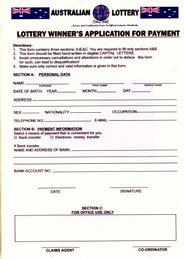
Any offer of a substantial percentage of a large sum of money to be transferred into your account, in return for your "discretion" or "confidentiality"; Requests for signed and stamped, blank letterhead or invoices, or for bank account information; Requests for payment in advance of transfer taxes or other fees; Statements that your name was provided to the soliciting party either by someone you do not know or by "a very reliable contact;" Unsolicited calls asking if you would like to be in a "Lottery pool"; Mail notifying you that you have already won a substantial sum of money. By: Nakosy
I wrote about it in one of our ezine articles not long ago. You can read about it here! And there are many other scams like Lottery, Letter of Credit, money transfer, black money conversion, real estate, fraudulent order and the list goes on and on.
Looking at my daily doze of scam letters, looks like, the lottery scam seams to be gaining popularity among the con artists.
This scam is similar to other forward fee schemes, where the goal of the con artist is to persuadan unsuspected victim to send an advance payment for some dubious offers that the swindlers never plan to fulfill.
Email Lottery Scam
The subject of the emails from an unknown source to you will, probably show, something similar to, "Congratulation! You have own a lottery". With minor variations the text in most of these letters is virtually identical.
The letter, usually, claims to be issued by a Lottery Company based in some countries like The Netherlands, Switzerland, England, Canada or the USA.
And then it says that you are one of many people randomly chosen from all over the world to participate in a lottery of a very large sum. You along with some others have won this lottery. You will be asked to contact them immediately to claim your prize money.
Most certainly, the letter will also warn you to keep this as a secret and will specify that the offer has a time limit.
If you contact them after receiving this letter; there are number of variation how the thugs will try to swindle you. They are quite imaginative and sometimes very innovative in their endeavors.
In general the idea is � you have to pay a fee before the lottery company can release the amount to you. The pretexts are, usually, an investigation company has to make sure that you are the right person who won the lottery, as a foreigner you have to pay a tax before you can get your prize and there is a processing and handling fee that has to be paid before hand, etc.
Don't think that these dubious offers are only sent by emails. People received them by regular mails, by direct phone calls and even by SMS.
Phone Call Lottery Scam
One fine morning you may receive a call from a person, claiming to be a lawyer from a prestigious law farm, and will tell you that you have won a foreign lottery; that a processing fee is due before the prize money can be released to you. The seniors are most likely to be the victims of these telemarketers. If you are located in the USA, most likely, the person will introduce himself as a Canadian lawyer and will inform you as if you have won a Canadian Provincial Lottery.
Lottery Scam by SMS
You may even receive a SMS message advising that you have won a foreign lottery. You will be instructed to log onto a website and enter a login and password, which would be provided to you in the message. The site will have the same look and feel of a legitimate lottery site, but in fact, it is a copy site created by the scammers. The URL address will have a very minor, virtually, unnoticeable difference. Once you log in and see for yourself that you have really own the lottery, you will be asked to forward a gaming tax of US $100 to US $500 before you claim your prize.
How to identify these scams and avoid being conned?
The number one motto that you should follow is � if it is too good to be true, then probably, it is indeed too good to be true! There is no way you can win a lottery, in what you have never
participated!
The followings are the signs of probable scam offers, you will be better off if you avoid them scrupulously: Any offer, where you have to send cash upfront to redeem you prize.
Any offer of a substantial percentage of a large sum of money to be transferred into your account, in return for your "discretion" or "confidentiality"; Requests for signed and stamped, blank letterhead or invoices, or for bank account information; Requests for payment in advance of transfer taxes or other fees; Statements that your name was provided to the soliciting party either by someone you do not know or by "a very reliable contact;" Unsolicited calls asking if you would like to be in a "Lottery pool"; Mail notifying you that you have already won a substantial sum of money. By: Nakosy
Subscribe to:
Posts (Atom)
 clasic